Interlaced, Len Lye/Govett-Brewster Art Gallery, New Plymouth, New Zealand
2024-25 (group show)
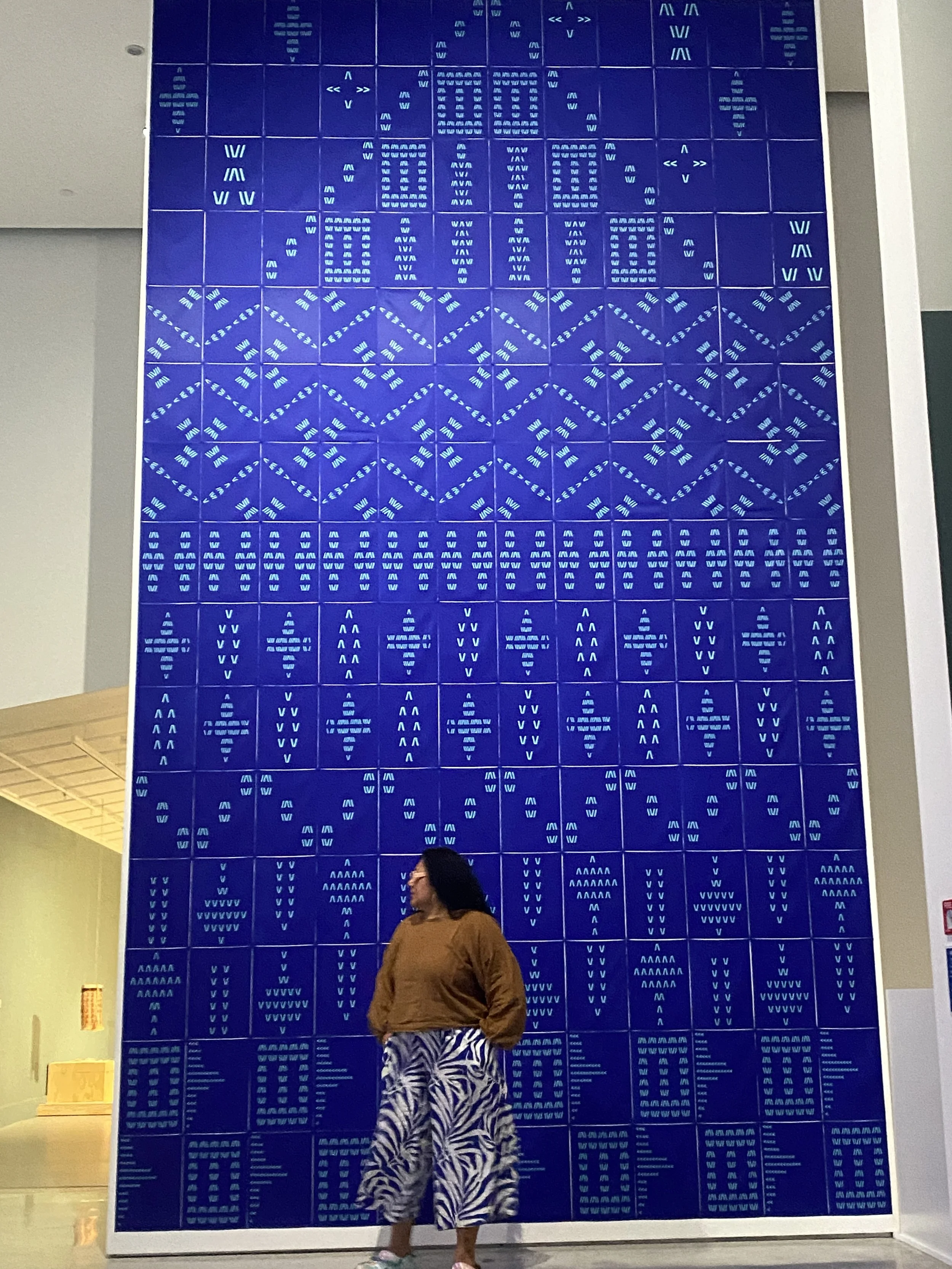
O le Sami Po Uliuli, 2024, digital print on textile installation
Vaimaila Urale
Interlaced: Animation and Textiles is the first major exhibition dedicated to the reciprocal relationship between these two artforms.
Artists: Faig Ahmed (Azerbaijan), Danielle Brathwaite-Shirley (UK), Jon Michael Corbett (Canada), Kelly Egan (Canada), Sione Faletau (Aotearoa, Tonga), Footprints Studio (UK), Sabrina Gschwandtner (USA), Marguerite Harris (France), Len Lye (Aotearoa), Aubrey Longley-Cook (USA), Jodie Mack (USA), Huw Messie (USA), Lindsay McIntyre (Canada), Miracle de Mille (France), Ng'endo Mukii (USA), Kate Nartker (USA), Ishu Patel (Canada), Pathé Studio (UK), Izabella Pruska-Oldenhof (Canada), Harry Smith (USA), Caitlin Thompson (Canada), Vaimaila Urale (Aotearoa, Samoa), Jennifer West (USA), Jordan Wong (USA), Shaheer Zazai (Canada), Studio Zeitguised (Germany)
Curator: Alla Gadassik
Spanning the gallery and cinema spaces of the Len Lye Centre, Interlaced brings together moving-image works fashioned from textile materials and patterns alongside fibre works inspired by visual transformations made possible by animation.
Artists featured in the exhibition explore ways of embroidering with projected light, quilting celluloid films, and weaving digital tapestries. By braiding together contemporary animation and textile art, Interlaced highlights the influence of textile history and culture on artisanal media production.
The work of renown experimental filmmaker Len Lye (1901-1980) plays an important connective role in the exhibition. Interlaced makes a compelling case for the influence of Pacific tapa design and British textile production on Lye’s innovative animation techniques. Nesting Len Lye’s animated films in a broader field of analogue and digital media, Interlaced explores the enduring capacity of textile forms to make visible animating forces and to reanimate intergenerational cultural memory.
Exhibition Art Review Excerpt:
To cut, stitch, and weaveBy Thomasin Sleigh · 18 February 2025 for Circuit
"Interlaced uncovers new histories and lines of enquiry: artists interested in the tactile qualities of analogue film; artists aware of the political implications of the clothes we wear and the cloth that warms us; artists entranced by the interplay of weft and warp." — Thomasin Sleigh considers the binds of film, fabric, and expanded forms of feminism in Interlaced: Animation and Textiles at the Govett-Brewster Art Gallery.”…
“Gadassik’s exhibition brings these two art historical absences together and draws connections between the mediums that may, at first, seem distinct from each other. Interlaced uncovers new histories and lines of enquiry: artists interested in the tactile qualities of analogue film; artists aware of the political implications of the clothes we wear and the cloth that warms us; artists entranced by the interplay of weft and warp. Throughout, Gadassik emphasises the repetitions that create form, image, and pattern in both animation and textiles. In analogue film, the illusion of movement is created by the repetition of many small, still images whirring through the projector. In textiles—weaving, quilting, knitting, and embroidery are some examples from a myriad of techniques on view—images are created through the repetition of stitches and links. Small, sequential acts accumulate to form a larger whole and this way of creating meaning and image has both metaphysical and material implications that are traced across the show.”…
“Lye spent time in Sāmoa in the 1920s and the art he saw and the people he met there greatly influenced his thinking and work. In the Govett, Sāmoan-born, Aotearoa-based artist Vaimaila Urale’s beautiful new commission, O Le Sami Po Uliuli (2024), brings contemporary Sāmoan politics and environmental concerns into the exhibition. The work towers above you; it is floor-to-ceiling and made up of many rectangles of bright blue digitally printed fabric. Here, Urale uses the simple forms of ASCII characters—a standard encoding format for electronic communication—to create wave and stitch-like patterns that are influenced by Sāmoan tatau (tattoo) and tapa (barkcloth). ASCII characters were developed so that many computers could talk to each other. They are repetitive and international. Urale, however, complicates this universality by using the symbols to recreate Sāmoan patterns and stories that reference specific knowledge and events: one pattern symbolises the recent sinking of the HMNZS Manawanui on a reef off the coast of Sāmoa. Here is the bounce then, in this show, between global and local. O Le Sami Po Uliuli is diagonally across from Faletau’s sensuous Peau Lalava o Moana, and I feel the two works reaching out, listening to each other across the intervening space.
Leaving the cool interior of the Govett, the ocean sounds of Faletau’s art following me, I scrunch my eyes at the bright sun. I walk up the street and my reflection follows me; I am both neatly doubled and strangely misshapen in the gallery’s wavy, mirrored exterior. Interlaced similarly doubles the mediums of animation and textiles to see what new knowledge might result when we look sideways at linearity. Two art historical absences become a new presence.”
Interlaced: Animation and Textiles was on view at the Govett-Brewster Art Gallery in Ngāmotu New Plymouth from 7 December 2024 to 27 April 2025.
Full art review available here: https://www.circuit.org.nz/writing-and-podcast/interlaced